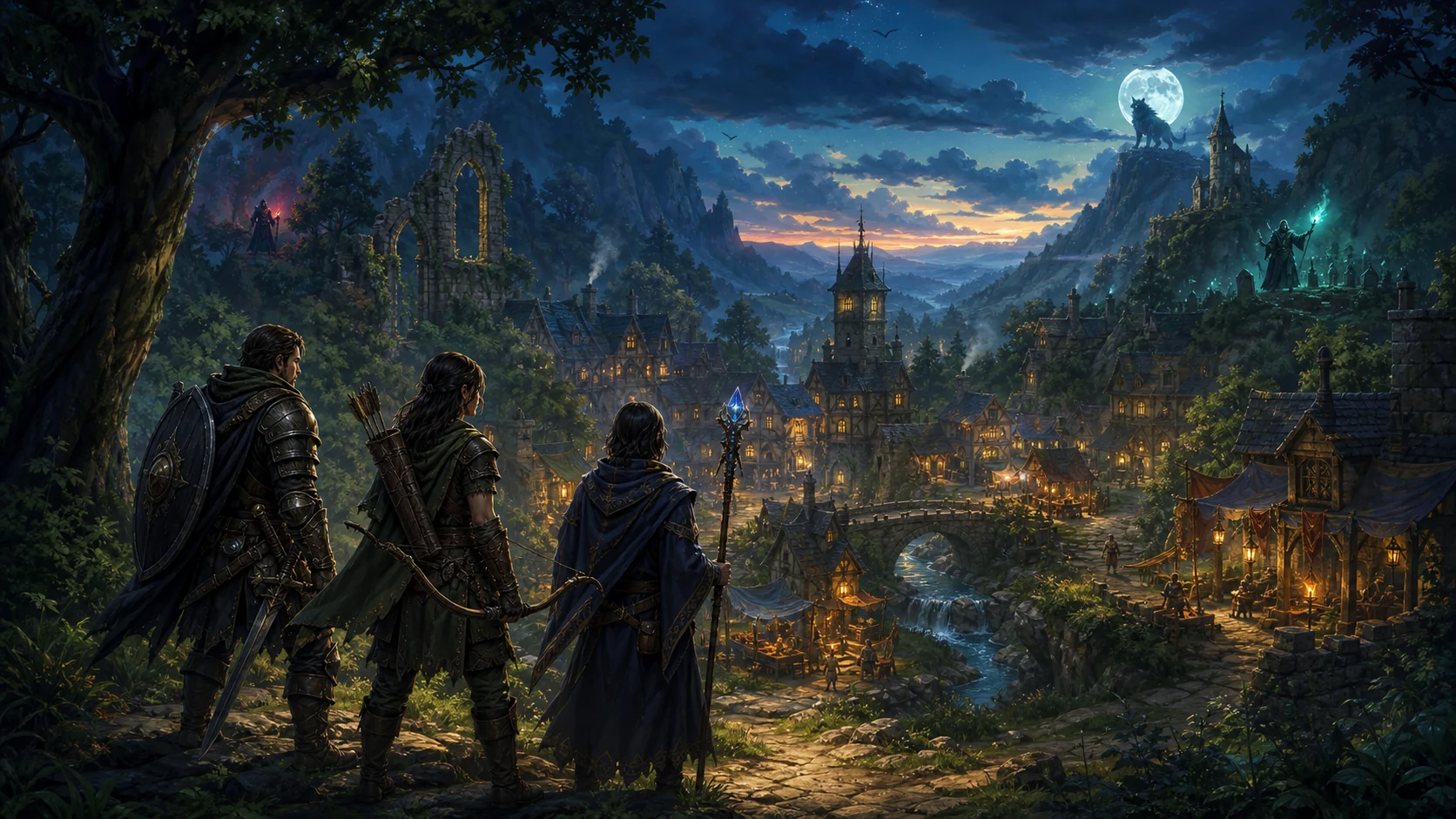
A settlement’s life
Built, defended, broken and remembered
mudgame’s towns are parts of a world system rather than permanent menu hubs. Their people have needs, their roads carry supplies, and pressure from nearby monsters can turn ordinary trade into a fight for survival.
A town takes root
Roads, useful land and regional needs draw people together. Buildings appear in stages, services open and regular travellers make the settlement known.
The wild presses back
Nearby monster groups grow bold. Requests for equipment, food and help reveal the pressure before an attack reaches the streets.
Players answer
Defenders may fight, bring supplies, rally allies or flee. Success preserves more than buildings: it keeps a web of familiar people and services alive.
The town falls
If the attack succeeds, survivors gather what they can and leave. The loss is real, but it begins a journey instead of deleting the community.
A successor rises
The caravan reaches a reported site, makes camp and builds in visible stages. Trade returns before complete safety. The former town becomes a shrine, graveyard or reclaimed patch of nature.
Caravans make consequences travel
An evacuation caravan moves at one tile each world day until a traveller reports a promising destination. Once the route has purpose, it moves three tiles a day and camps each night.
Players can escort it, trade with it, bring news ahead or discover that enemies have learned the route. The caravan is a moving town in miniature: vulnerable, useful and full of people whose future is not guaranteed.
A new town begins before it is safe
Survivors first establish a camp, then basic shelter, then trade and services. A half-built settlement remains playable throughout its growth, making construction a shared chapter instead of a timer hidden off-screen.
Monsters belong to places
Monster populations are paired with their territory: a primary threat supported by as many as three smaller minions. Defeating a group relieves the immediate road, but the world replaces pressure elsewhere rather than refilling the exact same spot.
Pressure gathers
Signs, wounded travellers and interrupted trade foreshadow danger.
Conflict breaks out
Towns and roads become active places where players choose to fight or flee.
The world rebalances
Safety earned in one region allows trouble to grow in another, keeping exploration relevant.
Quests grow from causes
A mudgame quest begins because something in the world happened. A caravan failed to arrive. A haunting was disturbed. A town needs a precise food supply. A messenger cannot cross a dangerous road. The task, the people and the location remain connected.
Solving the immediate request can create the next one. Ignoring it can also become history. The world’s stories are not random errands placed over scenery; they are the readable consequences of a place trying to continue.
Places keep their past. A ruined town does not reset to its opening state. The old ground becomes a landmark that tells later travellers what the world survived — or failed to survive.