How to read the web
Nothing happens in isolation
Each card starts with a short chain. It shows what causes a change, how people notice it, what players can do and what the world remembers afterward.
The moving world
Places change because something happened
The world does not refresh behind the player. Population, geography, time, relationships and recorded history create understandable pressure, then people and places respond.
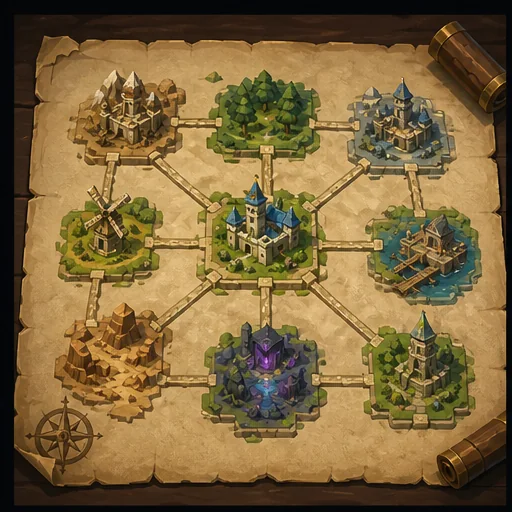
exploration → known routes → personal notes → learned change
The explored-world map
The world is made from connected macro-locations. Only the place where a character currently stands is shown live; obvious exits are visible, while hidden routes must be discovered. The rare explored-world map records each known location as one equal schematic cell, so it explains north, south, east, west and branching routes—not physical size, travel time or remote activity.
Discoveries and personal notes persist. When a town, road or landmark changes, old notes are kept as honest memory and marked outdated only after the character learns what happened through travel, a credible report, mail or local news. The map is sentient and may seek a new eligible owner after death or prolonged inactivity, so it is a companion to knowledge rather than a universal live GPS.
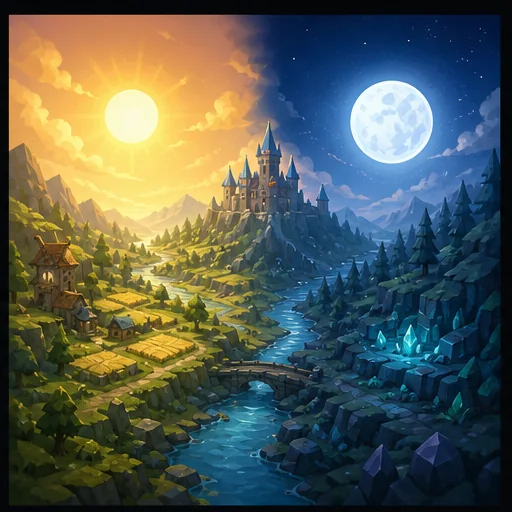
shared clock → daylight and moon → local behaviour → planned journeys
One sun and one moon
Everyone in the same world shares one authoritative clock. The starting rhythm is a 20-real-minute day—about 12 minutes of daylight and eight minutes of bright night—with an eight-day lunar cycle. Dedicated worlds advance while running; solo worlds pause when paused, and saved time resumes after restart without silently catching up offline.
Time is both atmosphere and world input. Birds give way to insects and night calls, but the colorful landscape, exits and characters remain readable. Vampires gain their contextual advantage toward night; Werewolves rise toward the full moon and are forced into Wolf Form during it. Town crises, animals, routes and authored stories may react to dawn, dusk or moon phase without making players wait for one phase as the only solution.
population falls → safe replacement → pressure moves → new local story
The population director
The server maintains flexible bands for primary monsters, completed towns, active shrines and active graveyards instead of respawning each thing at a fixed spot. The first whole-world test starts around 750 monsters, 550 towns, 750 shrines and 300 graveyards, but those are tuning baselines inside wider bands—not promises that every world always has exact counts.
When something leaves its band, the director looks for an eligible place that fits region, biome, history, spacing and safety. It never uses the population target as permission to appear beneath a player, overwrite an active event or reveal an unseen location. That means killing one monster, consuming one shrine or exhausting one graveyard can eventually create pressure somewhere else, while the old location keeps the history of what happened there.
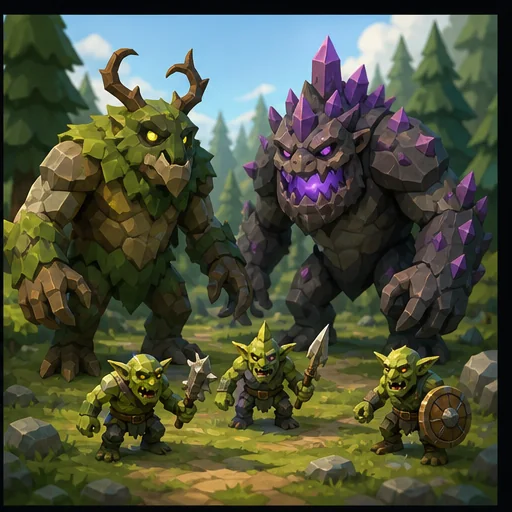
stable monster home → local pressure → fight or intervention → replacement elsewhere
Monsters and their pressure
Primary monsters have stable identities, home locations and histories. A normal location may hold two primary monsters; a pair can gradually produce up to three half-sized, half-health minions. Minions belong to that encounter rather than the world population, cannot spawn their own groups and enter an active fight through the normal reinforcement rules.
A killed primary makes a new individual eligible for safe placement elsewhere. Near-town threats generally run easier and favor +0 or +1 gear; remote threats can be harder and improve the odds of +2 or +3 without guaranteeing them. A named monster can block the only practical trade route, attack a town or create indirect pressure: a Necromancer may contaminate supplies, a Vampire may cause disappearances and illness, and a Werewolf may take livestock. Players answer the actual monster and state—not an interchangeable quest marker.
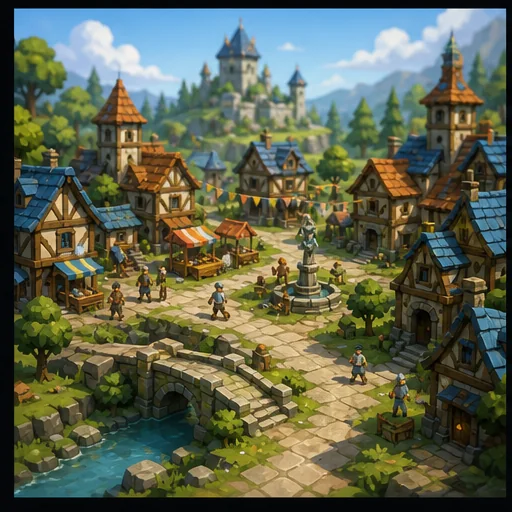
town life → threat arrives → fight or flee → safety, evacuation or ruin
Towns under pressure
A completed town is a safe social and service centre with traders, food, healing, storage, recruiters, specialists and local news. Its needs depend on roads, supplies, nearby dangers and history. One crisis can combine several symptoms—such as a monster blocking a road and weakening food stock—so the town tells one understandable story rather than producing unrelated errands.
If an unoccupied town suffers a valid monster attack, it is wrecked and its people evacuate. When players are present, the attacker visibly enters from the edge and each defender chooses Fight or Flee. Victory saves the shared town and records eligible defenders as heroes; flight or defeat continues the destruction chain. “Hero” and “the one who fled” remain local social memories, not power rewards or punishments. A ruined town later passes through visible abandonment and regrowth rather than resetting.
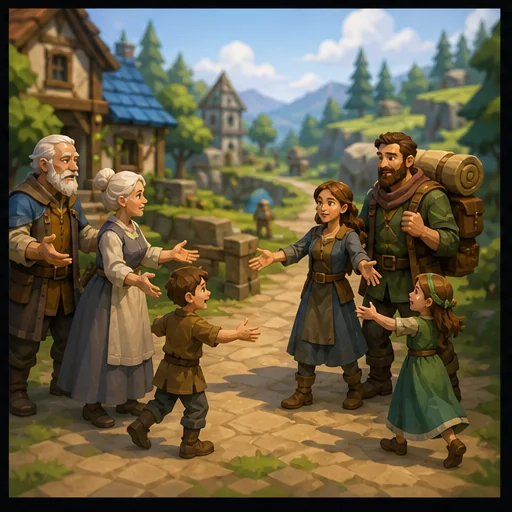
stable people → family and neighbours → truthful dialogue → remembered community
Townsfolk remember people
Generated townsfolk are not renamed extras. They have stable identities, and named speakers keep consistent authored dialogue and voice profiles. Towns joined by a short practical route know one another’s name and people. Temporary danger may block travel, but it does not erase that acquaintance.
Children who later leave in a founder cohort retain their named parents, home town and shared origin. The source town remembers who left and which successor town they built, even if distance or later damage separates them. Dialogue may mention relatives, trade plans, a named blocker or an old disaster only when the authoritative history makes it true. It must stop calling a monster alive after the character has learned of its death, and it never reveals remote live state merely because the server knows it.
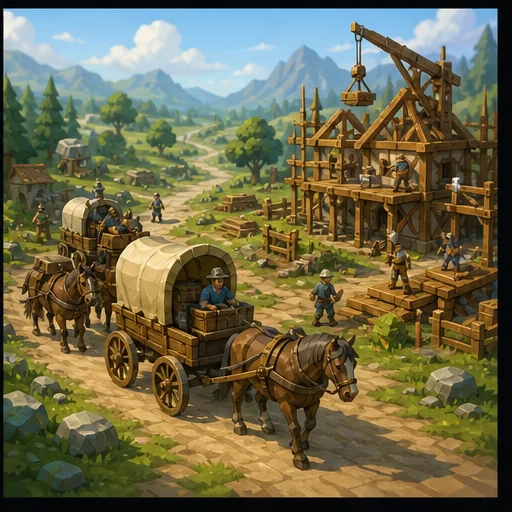
town shortage or destruction → founder caravan → site search → successor settlement
Founder caravans
When completed towns fall below their accepted band, one founding wave selects three safe source towns and raises one cohort in each. The first test gives cohorts 30 shared days to mature. A destroyed town also sends its survivors out physically. Caravans carry people, livestock and belongings; they do not teleport to a replacement town.
Without a destination, a caravan advances one traversable location per shared day, avoids immediate backtracking and camps at night. A player can discover a suitable site, hear their character recognize it, return and report it. The first valid report fixes the shared destination and lets the caravan move up to three locations per day along a checked route. The caravan remains vulnerable throughout: monsters and top-rank exotic players can end that lineage, and a failed wave is replaced only after the active wave closes and a cooldown passes.
reported site → vulnerable worksite → player help → completed town
Worksites become towns
A caravan establishes a worksite at least five traversable locations from every completed or wrecked town. The settlement grows through four visible stages instead of appearing all at once. The first unattended timing is roughly 60 shared days; delivered materials, protected workers, repaired structures and other authored help can shorten it substantially.
Trading begins before final completion, but the worksite is not yet town-safe. It can be attacked, disrupted or wiped, including through the warned top-rank exotic event. When the final stage completes, ordinary services and safe-town rules apply. The new settlement keeps its founders, parent town, player contributions and construction story, while the old town remains a separate ruined place that can eventually become nature, a shrine or a finite graveyard.
family connection → blocked road → named monster falls → trade is established
Trade routes remember why they exist
When a successor settlement reaches its trade-capable stage, it and its source town try to connect. The server checks practical routes. If one stable named monster controls every usable connection, both towns create dialogue and a lead tied to that exact blocker. A monster merely near the road does not qualify when a safe alternative exists.
Killing the blocker clears only the danger; it does not magically create commerce. The route is checked again, then a separate authored lead asks players to deliver an agreement, escort the first caravan, mark the road or complete another physical setup. Success creates visible caravans, appropriate exchanged goods, named cross-town dialogue and history in both settlements. Later danger may disrupt and reopen the route, but it cannot erase family ties, earlier trade or the players who made it possible.
world fact → local story → journal lead → real outcome and credit
Stories, not contracts
Dynamic quests begin with a world fact: a missing shipment, sick residents, a ruined bridge, a haunting, a caravan, a named monster or a shortage. People react through visible changes, authored dialogue, rumor, mail, crier news and concise Quest Journal directions. Players do not need to click “accept” before their actions count; resolving the real bound event is what matters.
Where the state allows, stories offer more than one response—investigate, fight, escort, negotiate, repair, rescue, rebuild or memorialize. Shared world outcomes are recorded once, while personal rewards still require meaningful participation. If somebody else resolves a lead, it can remain plausibly stale until the character visits a relevant place or receives a courier update. The journal then removes or transforms it instead of pretending the character learned remotely. Every result can feed later dialogue, services, access and history.
Guilds in motion
A calling changes how you touch the web
A character has exactly one public layman guild and may also hold zero or one hidden exotic guild. Switching layman guild costs 20 percent of the wallet. Exotic paths are capped, discovered through three personal clues and a private first story; their top two ranks force PvP outside towns.
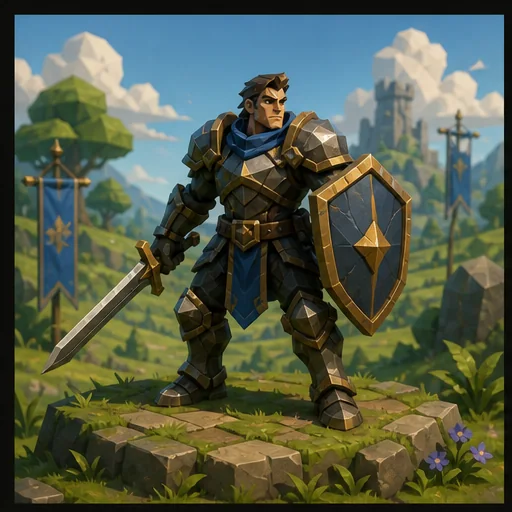
sword, axe or mace → equipped themes → direct combat → protected roads and towns
Fighter
The Fighter is the straightforward layman path for swords, axes and maces. Hand weapons remain physical; special effects come from the equipment themes and elemental affinity supplied by armor. That keeps a familiar weapon readable while letting different loadouts change which abilities the guild can interpret.
In the world web, a Fighter is a dependable answer to monster groups, caravan escorts, town defence and route clearance, but is never the only valid solution to a dynamic story. Active Fire affinity can support the wilderness hunting shortcut: a Fighter may throw a fire-charged sword that returns safely, cooking suitable prey immediately but destroying it when the Fire strength is excessive. Recruiters in most towns explain the outgoing and incoming abilities before any layman switch.
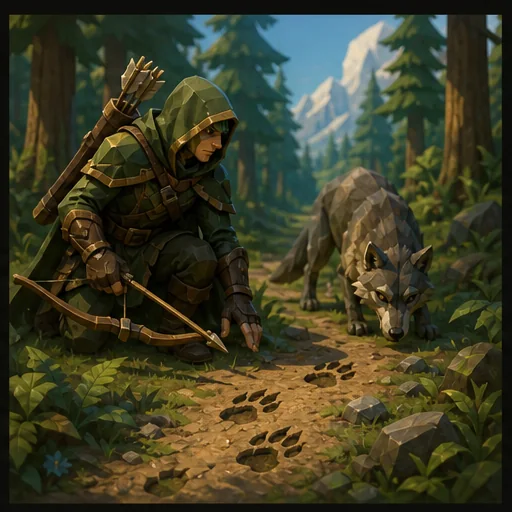
bow or crossbow → ranged interpretation → hunt and protect → supplies and safer routes
Ranger
The Ranger is proficient with bows and crossbows. As with every layman guild, the weapon itself deals ordinary physical damage while equipped themes and armor affinity determine the special abilities the Ranger can bring into a fight.
That identity naturally meets several dynamic chains: ranged combat against road threats, escort and protection stories, and stationary hunting for wilderness food. The Survival Kit supplies the ordinary hunting bow, while a supported Ranger weapon can make a Fire-affinity shot that cooks a successful catch immediately or disintegrates it when overpowered. Raw food can keep an expedition going, and during an active town request it can be delivered for coin and converted into prepared vendor stock. These are connected opportunities rather than an exclusive Ranger-only economy.
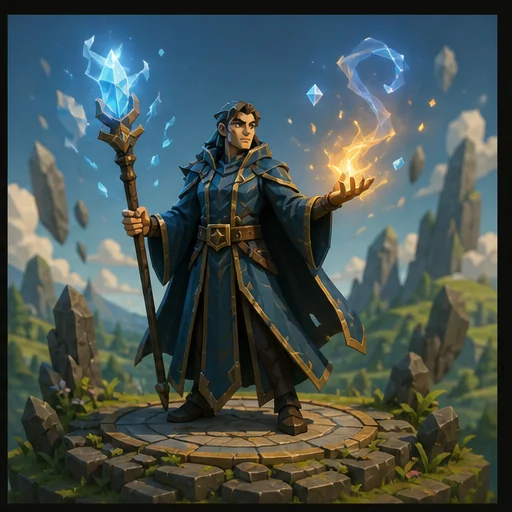
staff or wand → equipment-granted abilities → local challenge → altered world state
Mage
The Mage uses staffs and wands to interpret equipment-granted ability themes. A staff may provide a Fireball-like theme, but it does not quietly turn every strike into elemental damage; the five armor positions supply the active elemental affinity.
That separation lets the same Mage change approach by changing the equipment carried into the field. Combat, shrine challenges, protected construction, route repair and authored investigation scenes can all value different ability themes without granting one permanent universal spell list. Mage, Fighter and Ranger identities may also support the Fire-affinity hunting shortcut when the equipped weapon and loadout permit it. The result is still part of the food and town-supply loop: immediate cooked food when the shot is suitable, or no usable food when excessive Fire destroys the catch.
broad knowledge → investigation and Luck → revealed possibility → player reasoning
Lorekeeper
The Lorekeeper can use every ordinary weapon and equipment-granted ability, but every gear-provided damage modifier is reduced by one, never below zero. Its strength is breadth: exploration, knowledge, puzzles and a wider choice of tools rather than the most reliable direct damage.
Luck belongs only to this layman guild. During a meaningful losing fight it may occasionally create a plausible accidental rescue; at a shrine or puzzle it may reveal a relevant piece or clue. Luck remembers recent opportunities so extreme dry spells and implausible clusters can be controlled, but idle time and repeated trivial actions cannot charge it. Most importantly, Luck may help but can never be the only route to mandatory progress or the only way to solve a puzzle. The player still reads the world and makes the decision.
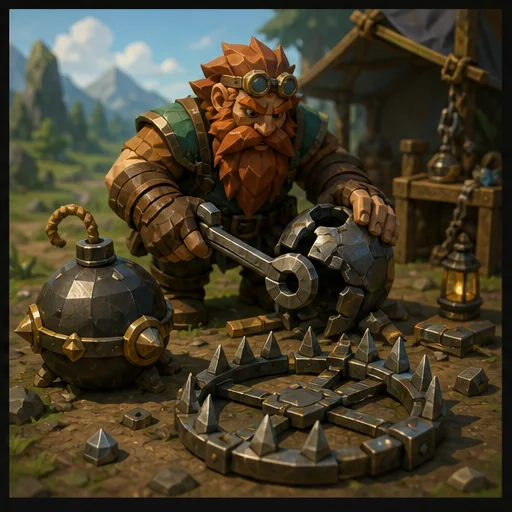
valuable gear is destroyed → bomb or trap → immediate power → permanent item cost
Tinker
The Tinker has no ordinary weapon proficiency. One eligible weapon or armor piece is permanently destroyed to make either two thrown bombs or one stronger ground trap. The item’s +0 to +3 modifier sets the payload and its element; a trap takes an action to place, only one may be armed, and the first-pass blast can also deal half damage to one nearby target.
Worn armor still protects a Tinker, but its offensive affinity does not power Tinker attacks unless the item is sacrificed. That makes loot, vendor resale and bag space part of combat strategy: yesterday’s spare armor may become today’s emergency weapon. A Broken Survival Kit also has a specialist afterlife as Tinker bomb material rather than simply disappearing. The exact recipe and values remain tuning, but the connection is fixed—power comes from giving up a real item.
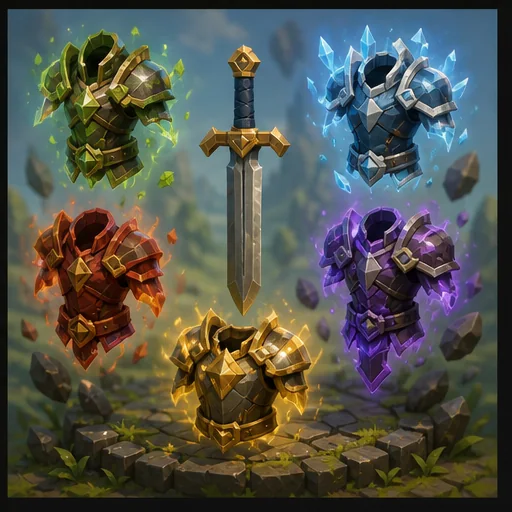
five armor modifiers → active affinity → abilities and weapon name → history-worthy loadout
Equipment modifiers and living weapon names
Head, chest, gloves, legs and feet each carry one elemental type at +0, +1, +2 or +3. Elements may be mixed freely for a maximum active total of +15. Matching resistance is a soft counter of roughly 50 percent, and equipment cannot be changed during combat. Hand weapons remain physical; armor supplies the elemental affinity that layman abilities interpret.
The weapon’s displayed name changes with the active loadout: a Sword may become a Sword of Kindle, Sword of Fire or Sword of Frostfire without secretly gaining a second hidden power. When all five armor pieces are +3—even with mixed elements—the active weapon awakens a true legendary name and becomes eligible for player history and a crier announcement. The same modifier also affects Tinker payloads, Necromancer conversion and Fire-affinity hunting, tying loot directly to several world systems.
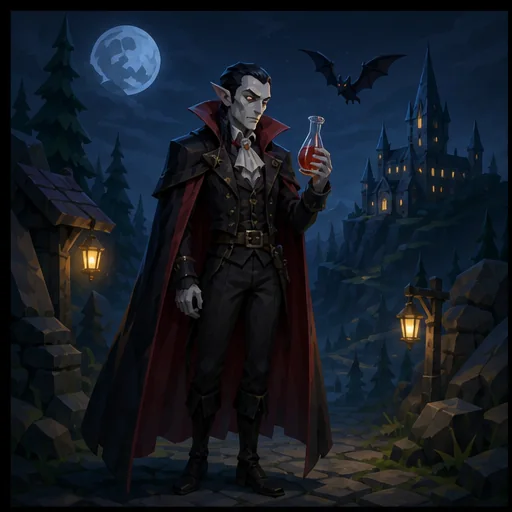
hidden clues → Vampire ranks → Blood and night → disappearances, choices and history
Vampire
A rare vacancy-aware invitation leads through Spawn, Vampire, Prince, Elder and Ascendant. Blood replaces mana: capacity begins at 100, feeding restores 25, and it never refills through rest or night. A recruited non-combat follower can serve as a blood source, but needs one shared day between feedings; feeding again too soon kills that person.
Night strengthens the path while daylight merely raises Blood costs. Bat Form moves two to three times normal speed along already discovered connected routes—never through danger, locks or unknown paths. A notified 30-minute tag applies only to a PvP-enabled target. Nearby Vampires can create illness or disappearance stories, and top-rank Vampires may choose the warned caravan or worksite slaughter event. Towns remain safe, while the top two ranks force PvP against eligible rivals outside them.
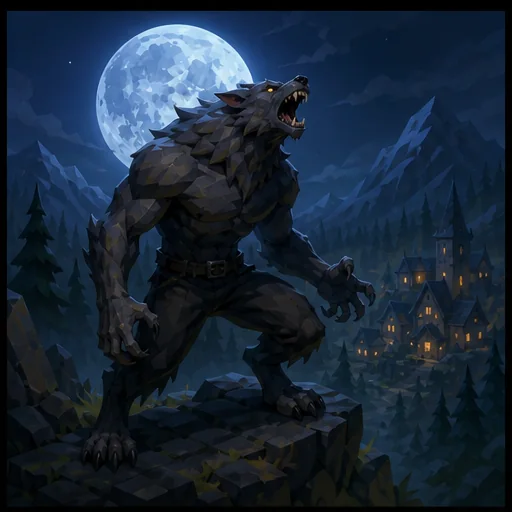
hidden clues → Werewolf ranks → moon and scent → packs, livestock and territory
Werewolf
The Werewolf path rises through Pup, Omega, Tracker, Beta and Alpha. Keen Senses can give direction and category for a player, town or monster within three locations without becoming a live map marker. Pack Call brings one NPC Werewolf to help a mostly solo character, but creates no extra reward.
Wolf Form travels connected known routes at two to three times running speed. Shifting is voluntary except during the full moon, which forces the form and marks the path’s peak context. A nearby Werewolf may kill livestock and create investigation, protection or supply stories. One Alpha territory per server guild can become a secret Werewolf town: ordinary characters see usable traders and services, while rival exotic intruders reveal its transformed defenders. Top-rank Werewolves share the same caravan/worksite consequence and outside-town PvP risk as the other exotic paths.
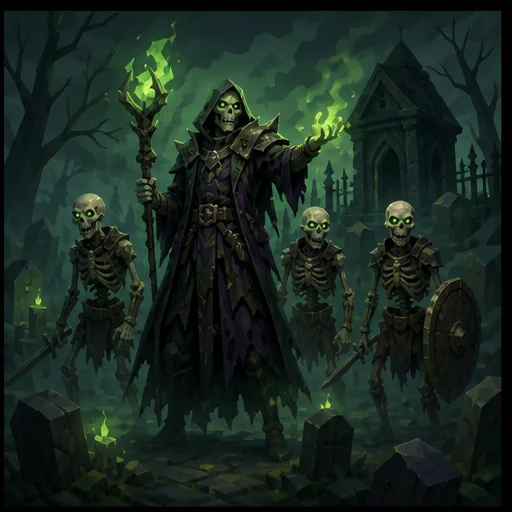
hidden clues → Necromancer ranks → finite remains → spirits, weather and regrowth
Necromancer
The Necromancer advances through Minion, Apprentice, Acolyte, Master, Lord and Monarch. Its Necrotic Power comes from finite graveyards and player-death stones rather than passive refill. It can question suitable dead people for broad directions within three locations, travel quickly along known routes in Ghost Form and command a personal corpse army capped at three.
A haunted player must ask for help in the same location; the Necromancer may cleanse the ghost or betray the request by adding one more, never a third. Active +1 to +3 gear may be converted into matching Necrotic damage, and local dark-cloud or clear-sky effects can counter Vampire and Werewolf context without changing the world clock. Nearby Necromancers can contaminate water, food or herbs. When a graveyard is exhausted, nature reclaims it and the population director may later choose a monster site, another graveyard or ordinary nature.
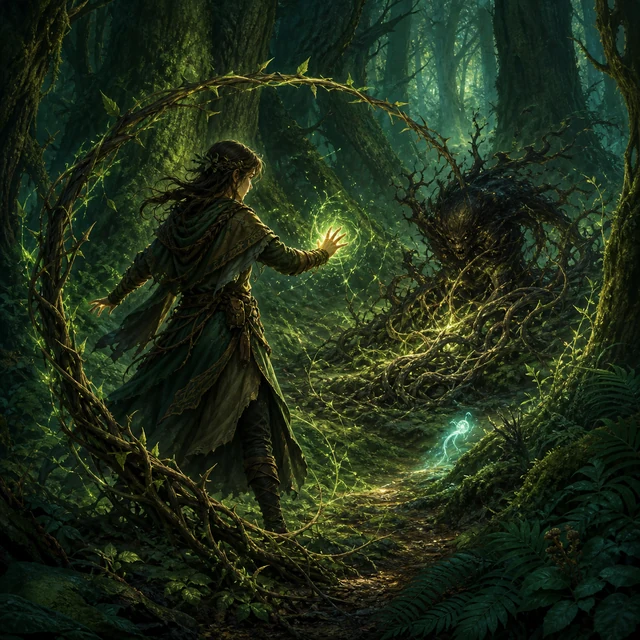
hidden clues → Fae-bound path → deep wilderness → Nature magic, safe passage and endurance
Fae-bound
The Fae-bound is a weaponless wilderness-magic path. It may wear only cloth or leather, never metal, and turns the active +1 to +3 modifiers on that permitted gear into Fae Magic: Nature damage for its abilities instead of an ordinary weapon attack. Rootbind briefly holds a target in living roots, while Thorn Ward creates a close defensive thorn effect.
Its hidden strength rises farther from completed towns, supporting stronger Nature magic and slow recovery outside combat without becoming a combat-healing loop. Wisp Form travels visible, already discovered connected routes at two to three times normal running speed, but never teleports, bypasses danger or locks, reveals unknown places or enters a completed town. The Fae-bound is made for long wilderness expeditions, trading ordinary weapons and town comfort for endurance in the deep wild.
Places with memory
A location can outlive its original purpose
Ruins, shrines, graves and mysteries come from history. They are physical sites with a beginning and an end, while what players learned or did there remains part of the world.
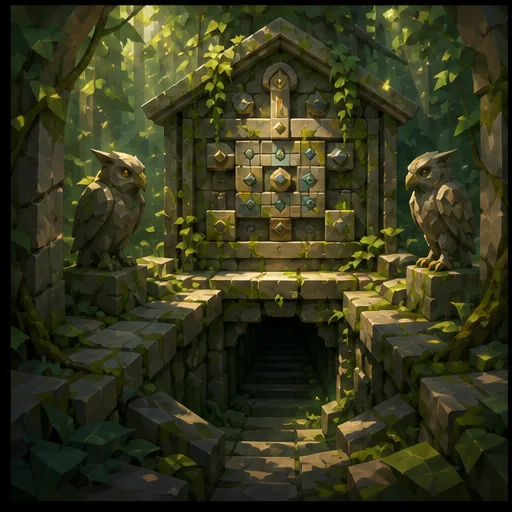
history and target pressure → shrine appears → shared challenge → site is consumed
Shrines
A shrine is a generated physical site, not automatically a puzzle or reward room. It may contain a mechanism, combat trial, memorial, ritual, haunting, hidden route or story discovery. Shrines can arise after a destroyed town regrows, or after a Necromancer consumes a death stone while the world is below its shrine band.
One solo character or a preformed party of up to four reserves the shared site; eligible participants must remain and contribute. Each receives one personal reward claim, then the physical shrine is consumed and may later be generated elsewhere. Its discovery and event history remain. Hidden entrances use fair, state-gated investigation, and an underground shrine becomes a separate current location rather than forcing the surface and depths to stay active together.
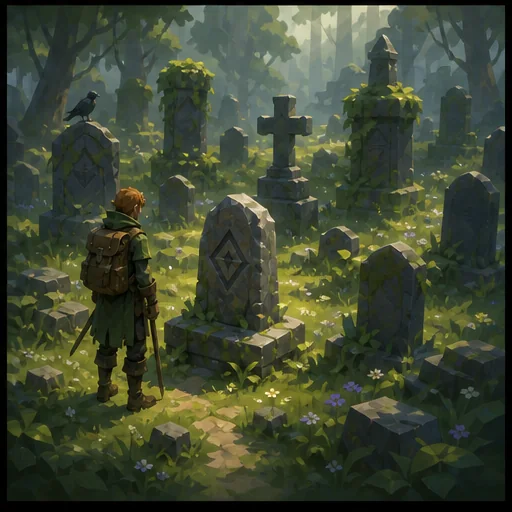
death or ruined town → physical remains → Necromancer harvest → nature and re-seeding
Graveyards and death stones
A graveyard is a finite world resource. It may form from a wrecked town’s long regrowth history, then depletes visibly as a Necromancer draws its bones and remains into Necrotic Power. A dry graveyard cannot be camped forever. The land settles, vegetation returns and the director may later choose a monster home, another graveyard or ordinary nature according to current pressure.
Every player death also leaves a small memorial stone on that location. It is separate from the corpse, Spirit Walk and merchant rescue, and it never revives the player. A Necromancer may consume the stone for power; when shrine numbers are low, that act may establish a hidden shrine on the same tile. Whether or not a physical marker remains, the death itself stays in authoritative history.
authored clues → reasoning and interaction → access or reward → personal record
Puzzles and guarded enclaves
Shrine puzzles keep every necessary clue inside one macro-location. Physical mechanisms and visual deduction lead the presentation, with readable alternatives; mathematics, music, language, biology and other knowledge may provide a satisfying shortcut but never require outside study. A solo player or eligible party solves one validated variation together. Attempts are unlimited, failure resets only the mechanism, and genuine engagement can earn up to three clearer hints.
Rare optional road enclaves use a harsher separate rule. Every entrance is visibly guarded, the trial gives three warned guesses, success opens all entrances permanently for the character or joined party, and three failures permanently close that enclave to those participants. Required towns, services and progression are never placed behind it. Exact answers vary through authored, verified families rather than unbounded generated riddles.
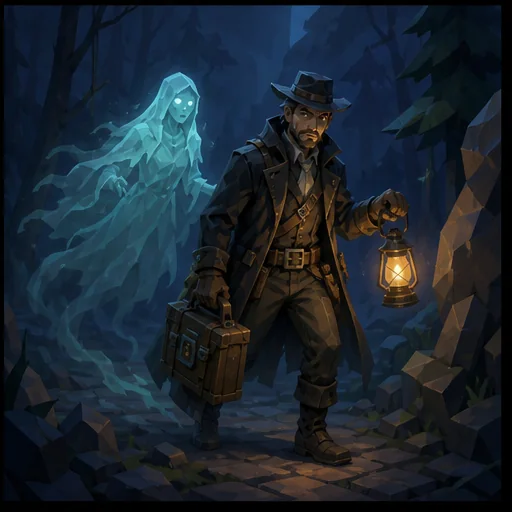
rare attachment → manifestations → deduction or danger → cleansing, death or identification
Hauntings
A haunting attaches to one unlucky character, not a location or entire party. It follows across connected places and survives logout and restart without causing offline damage. Only the haunted character receives authoritative evidence—temperature, smell, sound, animal behavior, moved objects, time, moon and other original manifestations—though friends may help interpret it. A finite-use Evidence Kit from merchants adds tools without replacing natural observation.
The player explicitly identifies the presence. A correct answer ends the case; a wrong answer or expired pressure window triggers an unblockable health attack, and ordinary death also ends it. A requested Necromancer can cleanse the ghost or add one additional ghost as a betrayal. Successful identifications feed personal history and the cosmetic Ghost Hunter, Expert Ghost Hunter and Exorcist ladder, with local crier recognition under the normal privacy rules.
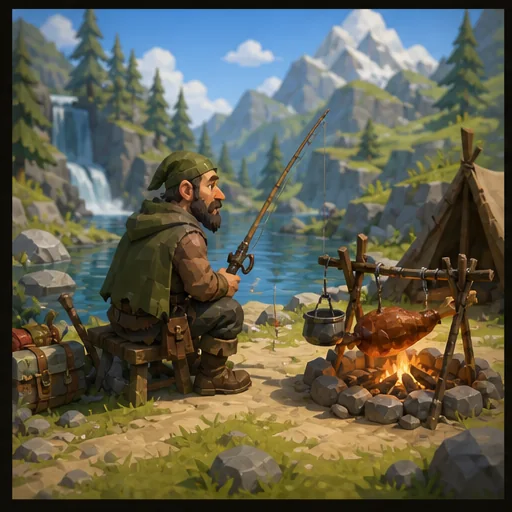
expedition damage → fish or hunt → cook and recover → town supply or healer
Fishing, hunting and survival
mudgame has no hunger meter, food spoilage or passive health regeneration. A one-slot, 50-use Survival Kit from any town supports fishing at suitable water, a stationary cover-and-aim hunting activity and quick campfire cooking. At zero uses it becomes a Broken Survival Kit that only a Tinker can later salvage.
Fishing and hunting produce raw food; cooking or buying in town produces prepared food. Prepared food restores half the missing health but never reaches full health and cannot be eaten during combat. Only a town healer completes recovery. Fire-affinity equipment can make a supported weapon cook a hunted animal on impact, but excessive Fire disintegrates it. When a town posts an exact food request, accepted raw fish or game pays coin and becomes prepared vendor stock, joining wilderness travel to the settlement economy.
distance and difficulty → earned quality roll → equipment choice → combat, economy and history
Loot follows danger
Content near a completed public town generally favors easier encounters and +0 or +1 gear. Distant monsters, shrines and underground depth can raise authored danger bands and improve the odds of +2 or +3, but no monster, shrine, vendor or dynamic story guarantees a +3. A party earns personal claims through participation; adding more players never improves the tier.
Ordinary vendors keep baseline gear and about eight shared generated items, refreshing every six real hours. A complete refresh has a 4 percent chance for one +2 or a 1 percent chance for one +3, never both and never through a paid reroll. Player-sold equipment remains in that vendor’s shared stock for 24 hours, creating supply for Tinkers and other travellers. Loot therefore flows into loadouts, resale, legendary names, specialist identification and deliberate destruction.
People on the road
Consequences need messengers, healers and opportunists
Important services belong to recognizable characters. They carry news, bodies, belongings, supplies and public memory between the player and the changing world.
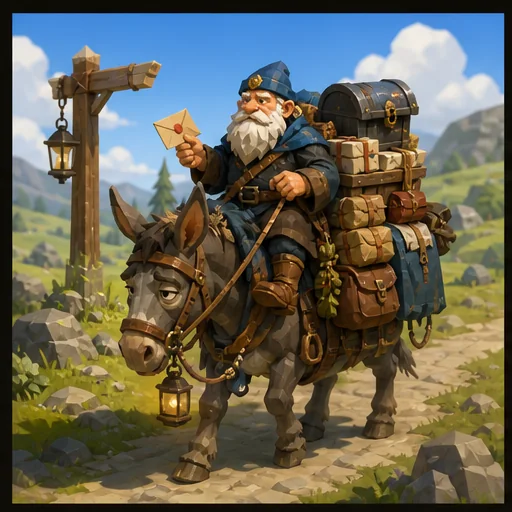
player, town or system message → ancient duo arrives → mail satchel → knowledge updates
The old mailman and his mule
All ordinary player, NPC, guild, quest and system mail is delivered free by a very old rider and an even older mule buried beneath letters and parcels. Somehow they can find a character in a town, on a mountain or deep underground. Their absurd survival is part of the joke and does not need a complete explanation.
Several messages are bundled into one visit. During danger they can cross the scene, deposit everything in the mail satchel and leave without consuming a combat turn or forcing open an interface. This makes them a real part of the world web: they can bring a town’s reward to the completion site, carry official dispatches to criers and tell a character that somebody else resolved a stale journal lead. Mail never inherits the travelling opportunists’ fee.
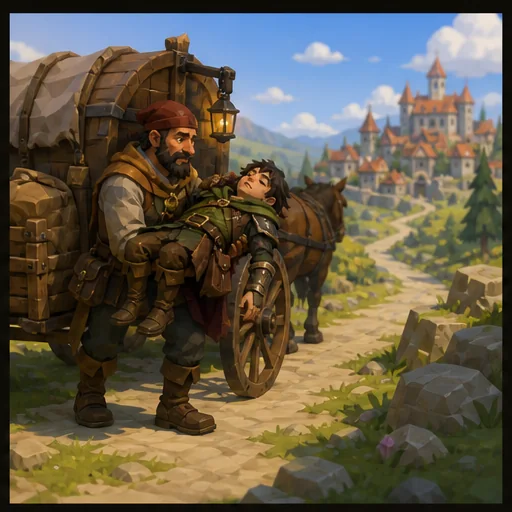
defeat → Spirit Walk or wait → merchant rescue → healer and full recovery
The travelling merchant
Defeat does not delete gear, drop money or erase progress. The player may Spirit Walk as a non-interactive ghost while the body remains, then return to the corpse and wait; or choose Wait for Help immediately. Player revival is not part of mudgame.
The travelling merchant is always the rescuer. They carry the body to the nearest known suitable healer and charge 20 percent of the wallet amount snapshotted at death, rounded down. Later spending cannot change that quote. A character with no coin is still rescued for free, accompanied by suitable pity or mockery. The healer completes full recovery, while the death tile retains its memorial stone and history. The service connects combat loss, geography, money, town discovery, healing and later Necromancer activity without permanent character punishment.
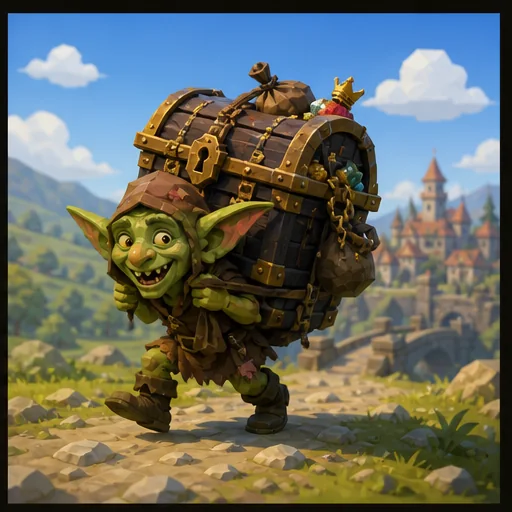
field bag reaches 85% → storage offer → one paid batch → safe town storage
The loot goblin
“Loot goblin” is the working nickname for the travelling storage courier. When the 25-space field bag reaches 85 percent full, the courier becomes eligible to appear. The visit may happen in danger, but it never steals a combat turn, forces open a panel or demands an immediate answer.
Opening the offer shows eligible items, destination, exact fee and remaining wallet. The player may send any number of selected eligible items in one batch or decline; quest and bound items are excluded. The fee is 20 percent of the wallet snapshotted when the offer began, charged once whether the batch holds two items or twenty. Payment and transfer commit together so disconnects cannot duplicate or lose either. With zero coin the delivery still succeeds for free, giving the goblin another reason to complain.
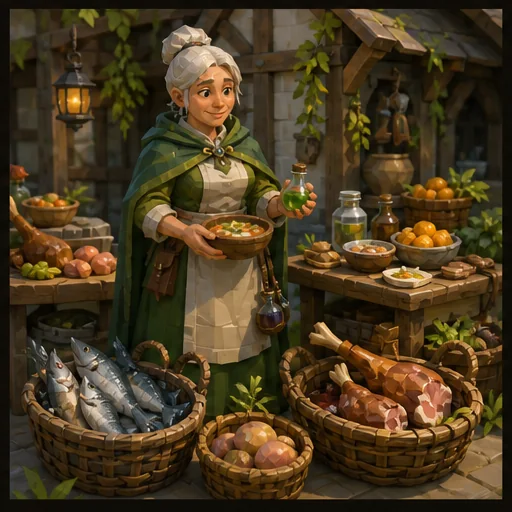
town stock falls → exact food request → player deliveries → prepared food returns
Healers, cooks and food stock
Every quiet server keeps a baseline path to prepared food and healing, so neglect never makes ordinary play impossible. Prepared food can sustain an expedition by restoring half the missing health, but only a town healer can restore the final point and return a character to full health.
When prepared stock falls below a lower threshold, the town may create one authored request for an exact quantity of raw fish or game. The server accepts and pays only the remaining quota, then converts those deliveries into prepared vendor stock. Over-quota deliveries do not become unlimited money, and another request waits for both low stock and a cooldown. Nearby monsters, damaged routes, missing specialists and failed shipments can all explain the shortage, allowing the food loop to join a larger local crisis instead of behaving like a detached vending timer.
wild gear → usable uncertainty → town specialist → knowledge or cosmetic identity
Blacksmiths, tailors and vendors
Wild-found gear works immediately and reveals its slot, family and ordinary purpose, but its exact modifier, affinity and other special qualities remain hidden until a town visit. A Blacksmith identifies metal-like equipment and a Tailor handles cloth, leather and comparable pieces. Each identifies every eligible carried item in one free action; identification reveals the truth and never changes the item underneath the player.
The same specialists can reskin compatible gear for a modest fee using authored models and material-appropriate palettes. Appearance changes are shared with nearby players but never alter power, collision, affinity or Tinker value. Vendors buy unwanted gear at low salvage prices, keep player-sold pieces in shared stock and supply baseline equipment, food, Survival Kits and Evidence Kits. If routes or shipments fail, stock can become part of a dynamic town story.
recorded deeds → crier or practice → public understanding → no invented power
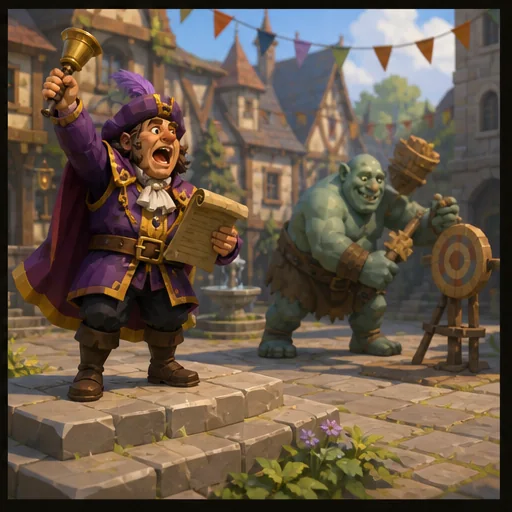
The town crier and practice ogre
Town criers turn recorded world history into folklore. A true server-first may be announced worldwide once; hero, fled and other local history stays local. A requested personal recital costs a modest fixed fee, while quiet stories appear no more often than every 15 minutes. Factual proclamations may be followed by a clearly embellished tavern version, but secret or private events are excluded, opt-out is respected and colorful delivery never changes rewards or history.
The retired dungeon ogre serves a different truth-telling role: safe, accurate practice for equipment-granted abilities. Players can learn damage type, range, timing, costs and restrictions without discovering them first against lethal danger. Practice grants no loot, progression, encounter credit or Luck opportunity. Together, the crier and ogre explain what the world remembers and what a player’s tools actually do.